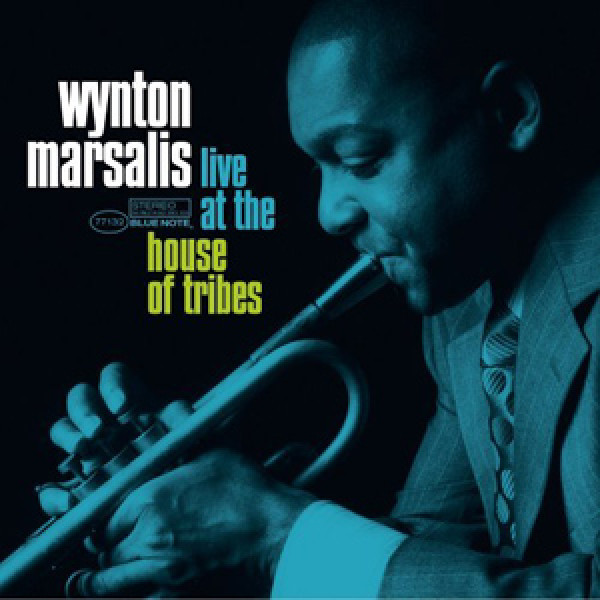
Live at House of Tribes
Track list
01.Listen Green Chimneys
02.Listen Just Friends
03.Listen You Don’t Know What Love Is
04.Listen Donna Lee
05.Listen What Is This Thing Called Love
06.Listen 2nd Line
Kengo Nakamura (bass), Wessell Anderson (alto saxophone), Eric Lewis (piano), Orlando Rodriguez (percussion), Joe Farnsworth (drums), Carlos Henriquez (bass)
DESCRIPTION
This hard swinging live recording from New York City’s intimate “House of Tribes” catures the jubilation, spontaneity and surprise of that late night jam session you heard about the day after you made a mistake and went home too early.
LINER NOTES
Europe, Russia, Asia, Australia, Alaska, Canada, the Caribbean, South America, and North Africa. Marsalis knows that the language of jazz is a lingua franca: when you swing, play the blues, deliver the romantic mood of the ballad, or lay into Latin rhythms, there is always a body of listeners ready to hear jazz as the spiritual elixir that it is. None of the talking of any sort means as much to a musician as the emotional force, the bond of soul and feeling, that gathers heat in the air when sound and the need to be moved meet. Then the space of performance and its circumstances are remade in the inimitable way we only expect from the invisible art of music.
The quality of such occasions accounts for why Marsalis has been selling out clubs and concert halls throughout his career as a bandleader. The endless standing ovations, the packed dressing rooms of well wishers and autograph seekers, the many presents brought by listeners, the small army of students he has inspired or taught or given instruments, and the family dinners he has been invited to, all add up to encouragements to continue on his chosen task, which is to deliver the artistry and the feeling of jazz wherever and whenever he can.
The performance you hold in your hand is, as are all Marsalis recordings, a culmination of where he was at the time of documentation. It was captured at what is an almost annual winter performance at the House of Tribes on East Seventh Street in New York’s Lower East Side, a section of Manhattan where jazz, poetry, and theater have been presented in alternative situations for more than five decades. The performance space at the House of Tribes is very small but the sound is superb and the audience comes expecting to have its soul boiled in the hot oil of deep feeling. That audience is made up of all colors and is from all backgrounds and religions, a common feature of the Lower East Side. For all of their differences, the people who show have one thing in common: they love the propulsion of swing as it arrives in the sound of jazz. Theirs is a desire for the timeless quality of joy that the artistry of jazz packs into every second as the cold, formlessness of the moment is overcome by the heat of human personality and the refinement of empathetic interaction. Somebody could say they come looking for a groove, and somebody else could say that when Wynton Marsalis is at the House of Tribes, they get just what they are looking for–and as much of it as they can stand.
Those unaware of the variousness of Marsalis’s career might be surprised to find him playing in a low-income neighborhood for an audience of no more than fifty people. They would find that surprising because they know he is one of the biggest stars in the world of jazz and could command a substantial fee at any high style room or concert hall in New York City. Such people would be unaware that Marsalis comes from a lower class community in New Orleans and has always been willing to support any organization that seeks to offer art to the people. In short, Marsalis has never been a doily afraid of the grease and the gravy on the table. He, like all great jazz musicians, is from the people and brings the message of the people, which is the fundamental good news of life. That is the optimism that defines the struggle at the center of the blues, the universal desire to meet dreams in the temporary forms of flesh and blood, or to present the sorrows and revelations of life as one has known them.
Of the House of Tribes, Marsalis says, “It’s a small community space where they can have theater. It has the type of feeling that those places have in the South. It is a grass roots situation. The people –Kwame Adansi-Bona, Orlando Rodriguez, and Dominique Bachemin–are devoted to keeping the community in touch with art. You can feel the dedication in the air. These kinds of places are all over the world and they exist for the same reason. People make them happen, regardless of money or attention or any of the things that we are often told you have to have in order to do something. For me, playing at the House of Tribes is like being at home, back in that environment of pure dedication, the kind of feeling that makes you want to become an artist.
The audience at The House of Tribes is of all ages but that audience has that thing in common that is always true of jazz audiences. They come to hear people *play* and they come to swing and have a good time. You can hear it in their responses, which are not clichéd imitations of people having a good time. Oh, no, this is the sound of an actual good time, which makes you want to play more and play better. The audience can always give you that.
Though you were not there, you can now experience, over and over, first class contemporary jazz deep in the blue pocket of swing and full of the creations one expects of its very best players. Greg Osby says that Marsalis is the most original and comprehensive trumpet player to arrive in jazz since Woody Shaw, and Shaw himself revealed his accurate sense of the future in something he told Maxine Gordon about the younger trumpeter. While they were listening to him in concert, Shaw said that he was absolutely sure that Marsalis was destined not only to take the trumpet to new heights, but that he would elevate the making and presentation of jazz music as well. Given all that Marsalis has achieved on every plain, that has proven to be true. But this recording is not about the breadth of Marsalis, it is about nothing other than playing jazz. In that context, Marsaliss extraordinary sophistication continues to deepen the power of his art while delivering it with the greatest command of his instrument since Dizzy Gillespie and Booker Little. Green Chimneys and Donna Lee should convert any doubters.
The heat, sweep, scale and substance of Marsaliss thematic inventions reiterate, at almost every captured moment, that he is, as Betty Carter once said of him, the destiny of the music. The music needed him. He had to appear. And he did.
Wess Anderson, as made clear on Green Chimneys, is a startlingly original master of the alto. His other equally original features prove him the kind of improvisor we hear very little of at this time of academic school boys playing memorized patterns. Though a young man, Anderson is the best version of old school: He is a genuine melody maker of the first order, heavy in his harmony, and glowing in his rhythm. Above all, as Marsalis say, Wess has heavy soul. It goes deep but it’s also buoyant, and he loves to swing all night. He and I have invaded jam sessions all over the world. Wess Anderson is always ready to play and spread that good feeling. Thats why musicians and listeners love him.
Green Chimneys also reiterates the fact that Eric Lewis, following Kenny Kirkland, Marcus Roberts and Eric Reed, is another of the fantastic piano players that Marsalis has introduced to the jazz world. Lewis is possessed of a talent that expresses itself free of the Herbie Hancock and McCoy Tyner methods that have become perhaps too common among the less imaginative of the younger piano players. (Also notice how well Anderson and Lewis sustain the ideas that Marsalis sets up on each song, which creates overall thematic order of another level.) Kengo Nakamura and Joe Farnsworth are two of the most prominent rhythm section players of the day. They have control of their instruments, which means they never play too loud and throw off the balance of the band. They know how to listen, support, and drive. They are top of the line professionals with artistic sensibilities. The same can be said of guest percussionist Orlando Rodriguez.
When you put that all together, you get everything a jazz lover needs: swing, melodic invention, harmonic surprise, rhythmic freshness, and a collective sense of improvising impassioned and logical music on the wing, surely the great performance gift that jazz has brought to Western music. Enjoy this indelible hot scoop of soul. It was made amongst the people, and for the people, which means that the music had you in mind, too.
- Stanley Crouch
REVIEWS
Barnes & Noble
Some would say that the best way to experience the true artistry of trumpet sensation Wynton Marsalis is to hear him live. The next-best thing is, of course, a live recording, and this scintillating document captures the esteemed horn man in just the right setting. Working with a mix of close associates and newer musical acquaintances in the confines of a tiny club, cutting loose on standards, Marsalis is in his element for sure. His beautifully assured playing — whether on ballads like “You Don’t Know What Love Is,” mid-tempo swingers like “Just Friends,” or breakneck boppers like “Donna Lee” — is stunning in its poise, eloquence, and sheer excitement. This is the unadorned Wynton playing his heart out, unencumbered by fancy arrangements or a larger ensemble. His compatriots rise to the occasion as well: alto saxophonist Wess Anderson is typically spirited, and pianist Eric Lewis impresses as well. Superb rhythmic support by bassist Kengo Nakamura and drummer Joe Farnsworth rounds out a live set that can compare with classics from the ’50s. A very encouraging audience adds to the convivial atmosphere. Recommended for anyone still unconvinced of Marsalis’ prowess as an instrumentalist.
William Pearl
_________________________________
All Music Guide
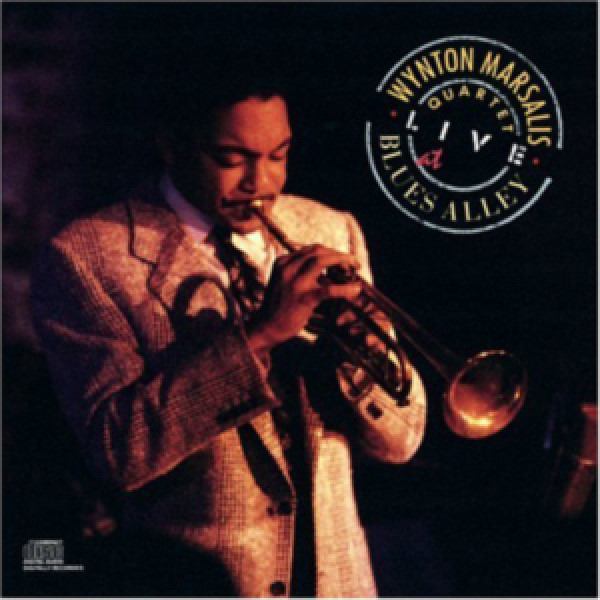
Live at the House of Tribes documents trumpeter Wynton Marsalis performing with his sextet at the intimate community theater space in New York City on December 15, 2002. Apparently an annual ritual of sorts for Marsalis, the performance makes for one of his best live recordings since 1986’s stellar Live at Blues Alley. Backed by a slightly altered lineup from his 2005 Blue Note studio debut, The Magic Hour, Marsalis gains first-class support from alto saxophonist Wessel Anderson, pianist Eric Lewis, drummer Joe Farnsworth, bassist Kengo Nakamura, and percussionist Orlando Q. Rodriguez. Special mention must be made of Robert Rucker for his highly energetic tambourine performance on the New Orleans “2nd Line” finale. New Orleans jazz aficionados may recognize this tune as “Joe Avery’s Blues” and based on the cheering, clapping, and general rowdiness of the crowd, it probably found the band marching around the room. In fact, one of the great things about the album is that you can really hear the crowd. There are many moments of the band playing a particularly nice phrase or line and somebody grunting out a surprised and pleased “hmmm.” Marsalis seems to really feed off this interplay and his playing, never less than technically superb, sounds inspired. To these ends, Marsalis takes swinging blues and angular post-bop harmonicism to ever-increasing absurdist heights on “Green Chimneys.” Similarly, he brings a mix of Clifford Brown and Clark Terry to “Donna Lee” and waxes romantic with devastating melodicism on “You Don’t Know What Love Is.” Loose, swinging, funky, and spirited, Live at the House of Tribes is an absolute joy.
Matt Collar