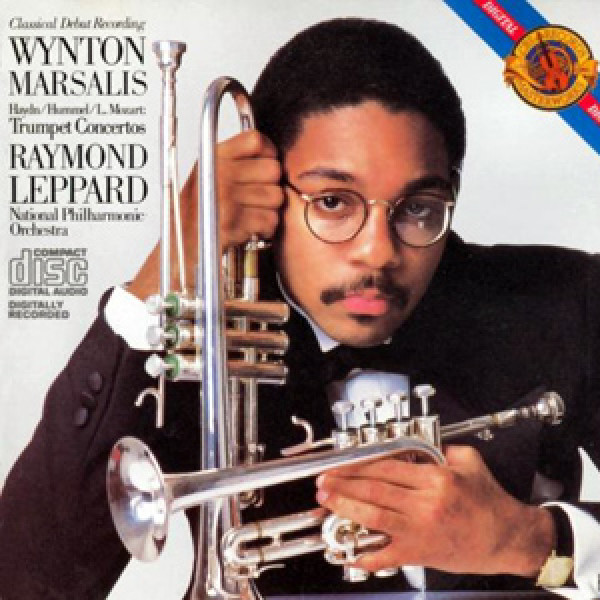
Haydn, L. Mozart, Hummel: Trumpet Concertos
HAYDN: CONCERTO FOR TRUMPET and ORCHESTRA
01.Listen Allegro
02.Listen Andante
03.Listen Allegro
L. MOZART: CONCERTO FOR TRUMPET and ORCHESTRA
04.Listen Adagio
05.Listen Allegro moderato
HUMMEL: CONCERTO FOR TRUMPET and ORCHESTRA
06.Listen Allegro con spirito
07.Listen Andante
08.Listen Rondo: Allegro molto

National Philharmonic Orchestra (orchestra), Raymod Leppard (conductor)
DESCRIPTION
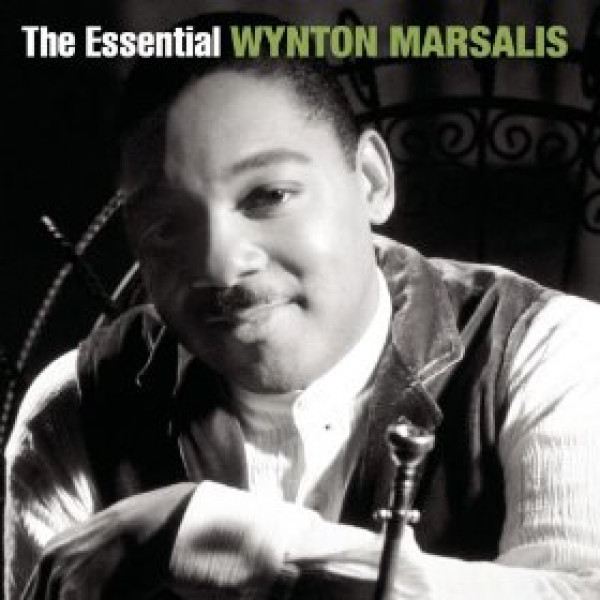
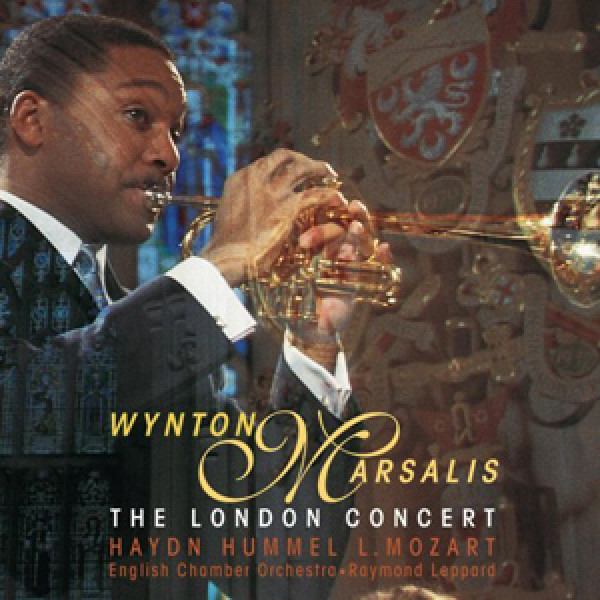
For mountain climbers, the Himalayas; for classical trumpet players, the Haydn, Hummel, and L. Mozart trumpet concertos. The young Marsalis tackles the climb with virtuosic technique and clarion tone. Wynton’s1983 Grammys for this recording and THINK OF ONE…made him the first and only artist to win classical and jazz Grammy Awards in the same year. This recording also marks the beginning of Wynton’s collaborations with the distinguished conductor Raymond Leppard, here leading the National Philharmonic Orchestra.
Franz Joseph Haydn (1732-1809) composed his only concerto for trumpet in 1796. The E-Flat Major Concerto was written especially for Anton Weidinger, court trumpeter to Prince Anton Esterhazy. Haydn began his association with the princely Esterhazy family in 1761 and continued in their employ until his retirement in 1790.
Johann Nepomuk Hummel (1778-1837) also composed his Concerto in E-Flat Major for Trumpet and Orchestra for Anton Weidinger. Hummel succeeded Haydn as Kapellmeister in the court of the Esterhazy family, and his Concerto was first performed for them on New Year’s Day, 1804.
Leopold Mozart (1719-1787) composed an extensive list of music during his lifetime but is generally represented in today’s record catalogues by a mere handful of works, along which usually can be found his Musical Sleigh Ride and the Concerto in D Major for Trumpet and Orchestra. The latter work was written in 1762 and is an increasingly favorite piece of virtuoso trumpeters.
LINER NOTES
YOUNG MAN WITH A HORN
The most memorable appearance at the 1978 New Orleans Jazz and Heritage Festival was the most unexpected—a skinny kid with glasses and a trumpet who ambled onstage one day during the mid-afternoon lull, hiked up his horn and blew the top off the jazz tent. One minute he sounded like Dizzy Gillespie, unleashing torrents of sixteenth notes at blinding speed. The next he throttled down into the middle register in an imitation of Miles Davis cool: whoever this local kid was, he was going places.
He has. At 20, Wynton Marsalis, the self-assured son of New Orleans jazz pianist Ellis Marsalis, is the new boy wonder of mainstream jazz. He has played with Art Blakey, whose Jazz Messengers have been a prime training ground for young musicians, and toured with the formidable team of pianist Herbie Hancock, drummer Tony Williams and bassist Ron Carter, all former Miles Davis sidemen. A classical musician as well, he has performed with the New Orleans Philharmonic (at 14 and 16) and the Brooklyn PHILHARMONIA and studied for two years at Juilliard. He has just formed his own five-man group, which includes his talented older brother, Branford, 21, on saxophone. His first album with Columbia is one of the hottest-selling debut jazz records in years.
The second of six Marsalis boys, he grew up hanging around New Orleans jazz clubs where his father was playing. He got his first trumpet, a present from Al Hirt, when he was 6, but he didn’t get serious about it until he was 12.
Along with receiving recognition in his hometown, he was judged, at 17, an outstanding brass player at Tanglewood’s Berkshire Music Center.
– Newsweek Magazine
© 1982 Newsweek, Inc.
All rights Reserved. Reprinted by permission
REVIEWS
His first classical album having been released simultaneously with his second jazz album, Think of One, the 21-year-old Wynton Marsalis found himself in the position of being the most celebrated purveyor of both the classical and jazz repertoire since Benny Goodman. His debut takes him to the core of the small solo trumpet concerto repertoire with three pieces from the classical period by Haydn, Hummel, and Leopold Mozart, and thus, directly into competition with more experienced, full-time classical trumpeters. Technically, there is nothing wanting in Marsalis’ playing; he pulls off the fanciest, most difficult figurations with hardly a care. His experience as an improviser is also an asset; he makes up his own marvelous cadenza in the first movement of the Haydn concerto, beginning with a pair of musical questions which he boldly proceeds to answer and continuing with other dialogues and wide leaps, all thoroughly within the classical style. Ain’t no jazz here; Marsalis sticks commendably to his brief. If there is a fault with these performances, though, it is that Marsalis is often too academic and cautious, particularly in the slow movements, phrasing smoothly and evenly but without the imagination of, say, Gerard Schwarz or other players. Raymond Leppard and the studio-bound National Philharmonic of London provide solid, lively, meticulously balanced, mostly brisk-paced orchestral support everywhere on the disc, which, on the strength of Marsalis’ jazz notoriety, became a classical best-seller.
- Richard S. Ginell
All Music Guide