
“Moving to Higher Ground” available in stores
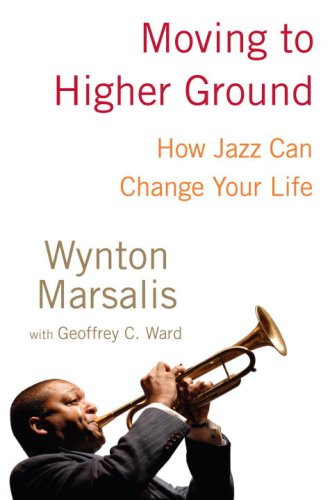
Wynton’s new book: Moving to Higher Ground: How Jazz Can Change Your Life, is now available in stores. You can order it online from Amazon. It is also possible to evaluate the book downloading the first chapter for free in PDF format.
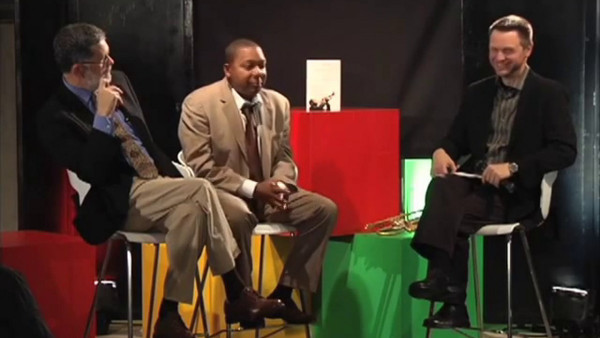
Today, at 7:30 PM, Wynton is going to discuss and sign the book with Geoffrey C. Ward (doors open at 7:15 pm) at Barnes & Noble at Lincoln Triangle, 1972 Broadway @ 66th Street. The event is open to the public. If you need more info, please call 212.595.6859.
Table of Contents
Introduction
“Now That’s Jazz”
CHAPTER ONE
Discovering the Joy of Swinging (page 3)
CHAPTER TWO
Speaking the Language of Jazz (page 21)
CHAPTER THREE
Everybody’s Music: The Blues (page 47)
CHAPTER FOUR
What it Takes – and How it Feels – to Play (page 63)
CHAPTER FIVE
The Great Coming-Together (page 87)
CHAPTER SIX
Lessons from the Masters (page 109)
CHAPTER SEVEN
That Thing with No Name (page 157)
An Interview with Wynton about the new book:
Q: You’re a musician and composer. Why did you write this book, which is about life and lots of other things besides jazz?
A: When I first decided to become a musician, at the age of 12 or 13, I was inspired by my father, and by the New Orleans jazz tradition. I was under the impression that I had only to learn the fundamentals of music—rhythm, melody, harmony, texture—to progress as a musician. What I didn’t know then was that over the next three decades, jazz music would teach me many significant things about living. This book grew out of ten years of conversatins with my friend Geoff Ward, and is my attempt to share some of it—about how important it is to be yourself in the world, and at the same time create while respecting the creativity of others.
Q: What does the title of this book, Moving to Higher Ground, mean to you?
A: Too often in life, petty squabbles and small-mindedness keep us from realizing a higher purpose. In jazz, that higher purpose is not theoretical: We want to sound good. And when we do, you can hear what it’s like when people are really trying to get along. It’s purely human: In Jazz, you can mess up and still come together, still move together to higher ground. The title means ascending through engagement.
Q: You suggest that the ideas at the heart of jazz can carry over into everyday life. How so?
A: Let’s take two ideas in jazz that are most central: swinging and the blues.
Swinging is the art of negotiation with someone else, under the pressure of time. It shows you how opposites can come together, without compromising who they are. The one who plays the highest-sounding instrument in the rhythm section—the time-keeping cymbal—has to find a way of working with the one who plays the lowest instrument, the bass. And the bass player, who plays the softest instrument, has to find a way of working with the player of the loudest, the drums. To succeed, everybody has to have a very clear idea of the common goal: What exactly are we here to do? In jazz we know: swing. In life, if everyone involved can agree on a primary objective, a group can accomplish almost anything.
The blues is many things—a musical form, a distinctive sound, a universal feeling—but above all, the blues is survival music. It’s message is simple: things are never so bad that they can’t get any better. It’s about crying over something, actually wailing—and it’s about coming back. The words may be sad but the dancing shuffle (the definitive rhythm of the blues) is always happy or heading toward happiness. The blues is about what is—and what is has demons and angels sitting at the same table. That’s a bitter-sweet and realistic message about life that everybody needs, that everybody can hear and respond to. I’ve heard people respond to it, all over the world.
Q: How do jazz principles apply to, say, holding a successful meeting?
A: If you come to a meeting without an agenda it’s probably not going to be a very good meeting. In jazz improvisation, the agenda is the form of the song. But an agenda alone doesn’t guarantee success. If everybody feels free to participate, unexpected things are sure to come up and will have to be dealt with intelligently. That’s true in jazz improvisation, too. Things are bound to come up. Some need to be discarded right away. Others need to be expounded upon. Anyone in the rhythm section playing along behind the soloist can decide, “Hey, we need to investigate this further.” And the soloist can respond, “Yeah, let’s go into that.” It’s a system of checks and balances, but what makes it work is the fact that everybody is listening and responding to what the soloist is saying without ever forgetting the agenda. That’s a pretty good model for swinging, and for getting things done.
Q: How do jazz principles apply to a family?
The central relationship on the bandstand is between the bass and the drums. They’re opposites of volume and register. The drums are the loudest and the swung cymbal is the highest-pitched while the bass is the softest and lowest-pitched. In order to swing, the right-hand stroke on the cymbal must find the right-hand pluck of the bass on every beat. While it is impossible to line those beats up with metronomic perfection it is possible to achieve a perfect intent to be together. That’s what you would like to see with a mama and a daddy. They represent gender opposites. While they try to come together to solve a problem we can go in the direction of a good time. When they don’t—when one is too loud or the other is unyielding—it becomes a matter of endurance, not swinging.
Q: What can jazz teach us about our feelings and ourselves as individuals?
A: We’re all given the gift of creativity. It comes out in all kinds of ways—the way we talk or dress or cook or whistle. I remember when I was a kid my friends and I used to see who could cut grass in the most creative way. But many times young people are put down for having a gift or skill that doesn’t fit with somebody else’s idea of what he or she should do with their lives. Jazz is the opposite of that. It tells you, “That’s you! Take pride in this thing. Express yourself. Your sound is unique. Work on it. Understand it.” Often it teaches you to celebrate yourself.
When we talk about expressing feelings in jazz, we mean spiritual feelings, empathetic feelings, feelings that are beyond thought. In jazz, musical ideas move too quickly for you to stop and analyze or to formulate a lie. By the time you think about it, that moment of music is long gone. Jazz teaches you to cherish how you feel in the moment. It puts a premium on having faith in the people you’re playing with. Because the second you lose that faith and start to question what they’re doing, the distraction takes your mind off the music and onto bad decisions that you will surely begin to make. The combination of emotional honesty and mutual trust that jazz demands can help you if applied to almost any field.
Q: How can jazz help you understand your own friends and family better?
A: At first it may seem like a paradox, but jazz helps you understand other people by teaching you that you never really know anybody. When you play music with someone—even someone you think you know really well—they’ll play things you don’t expect and can’t anticipate. You’ll go in one direction, based on what you think is going to happen and they’ll take a completely different path. Jazz lets people be free, and to surprise you—and them. It doesn’t let you mail in your response or let you lump people into categories that turn out to be meaningless.
It also shows you that people, even geniuses, evolve over time. The Duke Ellington who played in 1931 was very different from the Duke of 1961. So you learn to be patient with other people and respect the progress they’ve made and are still capable of making. One of the biggest challenges in dealing with friends and family is communication and more communication. Jazz forces us to communicate with people while recognizing their objectives, and over objectives, and where we can come together.
Q: How is jazz related to America, the country that created it?
A: This art form was created to explain who we are. We have rights and responsibilities in the music just as we do as citizens. The Constitution can be amended and songs can always be added to or changes. In jazz we place a premium on the individual’s right to self-expression but we also insist on checks and balances between one person’s rights infringing on another—the soloists and the rhythm section have to work things out together. Otherwise the piece is a mess.
Jazz allows us to improvise, to negotiate with one another. It’s the sound of many people coming together in one thing. You might be from Chicago and be Jewish but you can stand on this bandstand with a Creole from New Orleans and when both of y’all play, you’ll agree on what sounds good, and you’ll agree on it because you both can hear it. It’s democracy in action and it allows us, for all our faults, to see the success of our history. It tells us who we have been, who we are now, and who we can be in the future.
Q: Why is jazz especially relevant today?
A: This country is looking for change. Just look at what’s going on: An African American and a woman were leading contenders for the presidency; Big questions of race and identity; millions of brand-new voters turning out. Barack Obama carrying southern states in the primaries with a charismatic message of coming together. It’s a different time in our country and I think it’s the perfect time for this music.
Now, jazz has always been timely because it deals with the timeless issues of people, and of our democracy. Louis Armstrong dealt with them. So did Duke Ellington and Benny Goodman. But if you listen to political candidates today, they almost never talk about culture. It’s never really been part of our national dialogue and it should be, because it’s the best was for us actually to come together. We talk a lot about having national conversations and we’ve tried legislating unity. But we need to understand that art can bring people who are different together. Jazz provides a context for all the experiences we as human beings share.
The direction of our culture is ascendant. Jazz is a perfect embodiment of that. Jazz is ascendant. If we take a long view of the past 150 years, we won’t come to the conclusion that things are getting worse. We still have problems of corruption and greed. Jazz can provide a good antidote for them, too. To maintain their integrity, musicians have had to make many decisions that placed substance over commercial success. Jazz musicians have always aspired to an almost Utopian vision of a country in which everybody would come together and swing.
The contemporary excitement around empowering people is not new to jazz. Jazz is empowerment. Its first great achievement was to empower individual musicians to take part in the creative process through improvisation. Participation is essential to a healthy American democracy, and it’s essential to America’s greatest music, too. Everybody has to participate to make it sound good. Whether you’re playing or listening, you have to be active. If you’re just sitting there and waiting for something to happen, nothing will. I hope this book will empower as many people as possible to take part by showing how an understanding of jazz and its principles can change your life, and our lives together.
Comments
Hi Ingvar,
Hope I’m not being arrogant but perhaps you are referring to my remarks. I was drawing the correlation between how we must use laws or principles in order to master ourselves or something – like Wynton and other musicians have mastered their instruments. More importantly and vital, is the need to meet the right mentor(s). Only masters can take something to another level.
Thank you.
Beverly Joy Douglas on Sep 28th, 2009 at 6:13pm
Excuse me. Are you talking about jazz or religion? Seems that some of you mix up the two subjects pretty much.
Ingvar on Sep 27th, 2009 at 8:22pm
How do I get this book since it’s not all that easy to purchase all the way from Nigeria? I am a trumpet player and needs to lay my hands on this book. Wynton… a blessing to this generation. “The new Louis Armstrong”
Apata Paul 'bamise on Jun 12th, 2009 at 12:45pm
How you doing (“Norbit”)?
Have a great day!
Beverly Joy Douglas on Mar 12th, 2009 at 2:35pm
All Rise
Abyssian 200
These go straight to Jesus, I tell you, straight to Jesus.
Karen on Mar 12th, 2009 at 11:55am
wow it seems this book has kicked up a little bit of fuss …. i haven’t read it, so obviously i can’t comment on it ….. but it is true , the only hope of salvation we have is through the Lord Jesus Christ …. jazz music may sooth the soul and help you to connect with a person through their self expression … but at some point we have to look to our father in heaven and thank him for all the blessings we have and enjoy…..and that is when it can get dangerous… if you don’t acknowledge him ,you become a dissobediant child.
Remember what jesus said ’ The only way to the father is through the son’…. no amount of jazz music will save you, only jesus can….
I am a Wife/mother/singer/pianist (busy career) i love music….. jazz especially … i feel drawn to the pure soul in it…. i can really feel it….. i love music, however it is important for me to see that i should be doing all things for god..it can be easy for us to fall to idolotry …. idolizing thigs which have no significance…. i can only worship one god jesus…… it is important that you are loving god with all your mind body and soul … we can definately do this through the gifts the lord has given us….. we want to stay on the right path … and be doing the will of god not satan…… and if the lord see’s it fit for you to be at home with your family … then that ultimately is the best possible outcome …… whatever situation in your life occurs just seek god …. have faith that all things are possible through him, we can do nothing without him….
May god bless you all .. may he make himself known to you
April x
April on Mar 11th, 2009 at 5:41pm
Living and doing all that God created you to be is axactly what Wynton is doing.You’re purpose in life does not mean running to church and preaching to people at every chance you get,but it is about using your God given talent to reach people,and that is exactly what Wynton is doing.What you do with it is your own doing.Wynton is the perfect example of what it means to be disciplined,what it means to walk the lonely road that will enable you to self master your abilities.
Conrad Hoffman on Dec 30th, 2008 at 5:44am
Wynton,
I’ve taken the liberty of sharing excerpts directly from the book or from the interview during my jazz program – I hope that is okay. We’re always trying to master ourselves and we need philosophies and belief systems that compliment the dynamics of the universe. Since the freedom that you enjoy now is from your mastery of your art, and, if our lives could be compared to one of your artistic expressions with a vision that constantly changes towards it’s way to victory – then every day would be a valuable day. Fortunately, you know what your mission is and therefore remained focused. I think that is what all of us long to actualize, which is hard to do when we are not taught interconnectedness as a norm. Thanks for “The Midnight Blues,” because when you cry – I cry too, sometimes.
Bev
Beverly Joy Douglas on Dec 4th, 2008 at 2:37pm
ditto
ms jackson on Dec 3rd, 2008 at 6:41pm
Took the opportunity to read “Moving to Higher Ground” over the weekend. Truly enjoyed it – it’s very consistent. I found so many similarities to what “True Buddhism” (Nam Myoho Renge Kyo)says about looking inward for the same balance/harmony and energy identical to the universal itself to surmount all of lifes challenges and “win”. Anyway, I left Harlem in 2001 but if I were to be in NYC tomorrow I sure would be trying to see the quintet perform at Brooks Bros. and probably buy a little something too!
Much Apreciation,
Bev
Beverly Joy Douglas on Dec 2nd, 2008 at 5:31pm
nokuir I DO AGREE WITH YOU on some of the issues of who is trying to play jazz these days and who is and who is being recongized for it in many of the comments you stated above on THIS site. I hear your growth. but with legacy built in the home….when you say that as your grow with jazz on stage and experience performing with some legends you will know, you will change this statement.
ms jackson on Sep 30th, 2008 at 4:46pm
nadia Woman in Jazz wel Should we ask Todd Barken about this?? he has had some interesting choices and many more to come. Woman in Jazz and musicians on the bandstand? Well many singers get up there and DO not know the key the tune they are singing in or educated structure of the song they want to sing. now do not be mistaken it is good to beable to sing in and play in many keys and approach a song in diferent ways. most people who say well you didn’t do I remeber April in G everybody knows its in G. Well you get that same musician who blurts that out on stage 8 times out of ten he can’t play it in any other key because he can’t tranpose his solo in it .for one
ms jackson on Sep 30th, 2008 at 4:18pm
To say i truely kNOW Wynton Marsalis is like saying I know jazz, its like saying I know improvisaton. PLEASE NOKUIR HOW DO YOU NOT KNOW JAZZ HAS NOT SAVED PEOPLES LIVES IN THE CONTEXT MR MARSALIS IS IN REFERENCE TO? HOW MANY JAZZ HISTORIANS DO YOU KNOW OR HAVE SPOKEN TO. Were you there When we had to play or sing in undergournd joints and knowing one could get hung if caught swingin’ and singin in SIN so to speak? or How about one’s life being saved because a person WAS there when they thought he was the one that rapped some plantations’s owners daughter!! Yes Jazz in this context has saved someboday’s life.
Yes it saved many peoples lives in the musical scene My God do you play like you speak with secondary facts and no soul with little experience of such just how old are you and how seasoned person in Jess (jazz) and life are you?
ms jackson on Sep 30th, 2008 at 4:06pm
Thanks Karen.
C.
careba on Sep 28th, 2008 at 6:52pm
look this….wynton plays trumpet and chess at the same time
Calvin He on Sep 25th, 2008 at 5:00am
Thanks for the link.
It was already scheduled to be published this morning.
Luigi on Sep 22nd, 2008 at 8:18am
WOW!….really good!.
Thkx.
Take care and best.
Careba.
careba on Sep 22nd, 2008 at 7:26am
Really good one!.
Luigi, I think it deserves to open an info entry with it.
Thanks and best.
MTS
MTS on Sep 22nd, 2008 at 7:22am
Best.
C.
C. on Sep 22nd, 2008 at 6:36am
Just bought the book, Wynton.
reading it now….
Charlize on Sep 14th, 2008 at 11:34am
Charmaine,
I am not a musician, but I will say that some of my closest friends are mostly Jazz artists. I have family members also who are in the business. So I guess that you can say that I’m surrounded by Jazz in some shape or form.
I’ve learned a lot from just talking to a few of these artists-both men and women.
They are in agreement about the severe lack of respect for women musicians. There are always exceptions, but mainly women are limited to the vocal arena. It has been like that over time and has yet to change. Many of my jazzy male musician friends will openly admit to the sexuality part because let’s face it, whether we like it or not, sex sells. Many of my jazzy women friends say pretty much the same thing-sex sells. Some have admitted to going to extreme lengths just to get noticed by the masses and in turn have managed to sacrifice their integrity and thus compromising everything they’ve worked so hard to achieve throughout their lives, all for the promise of a lucky break.
Sadly, nine times out of ten-that brief ten seconds of fame is fleeting, but in the interim they managed to gain a reputation among the more unscrupulous so-called mentors as easy prey/easy lay.
I wish I knew what to tell you, girl. Personally I feel that no woman should ever sacrifice her being for anyone, but I’m not a musician. I can only speak as a black woman. And I know what I wouldn’t do.
NADIAS on Sep 12th, 2008 at 11:16pm
Hi Nadias,
I am guessing Nadias, that you are actually in the music industry. I am curious to know, what choices and compromises do women have to make in order to be successful ? Talking to my trumpet teacher Ms.Blakely Carrol, she explained that women should not depend too much on sexuality if they want to have a long term career.
Charmaine Nokuri on Sep 11th, 2008 at 11:45am
LOL…I won’t comment on that, girl!
But seriously…stay true to yourself, Charmaine. Be blessed in the knowledge that you are a voice in this world. Maybe not everyone will listen. But you’re sure to get the right audience somewhere.
I have to go. I smell some toast burning!! LOL Karen. God bless you also.
NADIAS on Sep 10th, 2008 at 5:08pm
Wow Nadias,
Thank you so much for the encouragement, you don’t know how much I needed to read that today. I am often the lone voice of reason, but no one seems to listen to me. Why you may ask? Because in truth for the past 7 years I have been a stay at home mom, lol. No, I don’t have any Grammys or some great career. I am just a black woman who grew up in Northern Virginia surrounded by some the elite of the elite, but realized that having a Godly home was more important than climbing the Ivory Tower or playing at the Kennedy Center. Every time I see my childern smile, I could care less about what this stupid world has to offer. I believe legacy is built in the home not on the stage and from what I’ve heard a few trumpet players I know don’t understand that, at all ;)
Charmaine Nokuri on Sep 10th, 2008 at 4:39pm
Girl, you burnt toast.
Karen on Sep 10th, 2008 at 12:14pm
Charmaine I agree with you 100%.
Of course there will always be people who
will place you in the “oh here we go again!” category because your opinions are not “majority rules”. Even the best of friends disagree sometimes!
It just always kills me when women who think they know, really don’t have a clue. They rather play it safe and portray you -just because you may have opinions that differ from Wynton or whoever-as just another girl who feels scorned and should just be quiet while everyone lavish praise to the high heavens. Wynton as far as I know is a great guy, a fantastic musician..I can go on and on. Do I agree with everything he says, or do I believe his mouth is the prayer book? No. Do I love what he brings educational wise to the masses? Absolutley.
Charmaine, never stop speaking about these issues facing women musicians. Never be afraid to be unpopular. You are obviously intelligent. And I believe that if you ever got the chance to meet Wynton one day that he will more often than not respect you for your thought provoking topics and not think of you as another whiner. Knowing him, he’ll have more respect for someone like you, than someone who thinks that she knows the whole story. She may think she knows, but she has no idea whatsoever.
Stay blessed.
NADIAS on Sep 9th, 2008 at 11:04pm
Nadias we must truly be kindred spirits. I have played trumpet since I was 8 and aspired to be like Wynton. But as I grew older I became very put off by the arrogance of certain jazz musicians. They are not all bad, but I believe that the way jazz music is taught today contributes to why QUALITY jazz music is ignored.
I wrote about this in my blog today, after reading the Myspace page of Orrin Evans, a jazz luminary, where he talks about “Jazz masturbators.”
“jazz has become completely watered down and institutionalized in schools. This is okay to some degree, but the majority of people now producing jazz music are white middle class musicians who are racist and who don’t have the slightest clue about the struggles of Black America that shaped jazz music. To these people jazz is just notes on a page or theory that has to be practiced ad nauseum. This creates a type of jazz music that indeed has great musicianship, but is largely soulless. I believe whole heartedly that it is almost utterly impossible that a so called jazz musician can create quality jazz music if they do not embrace and respect the people who created this great gift from God.
Charmaine Nokuri on Sep 9th, 2008 at 12:41pm
Seems like everyone would do good to take a page from that book.
NADIAS on Sep 8th, 2008 at 10:45am
Seems girls have been going on about Wynton like this all the way back to Cynthia Falgoust in the 7th grade.
Karen on Sep 8th, 2008 at 9:29am
Charmaine,
I commend you for your eloquent words and for having the courage to speak about the truth. As much as I may enjoy Mr. Marsalis music as well as Jazz music in general, loving jazz does not change the person who you really are. If you are an egotistical self centered individual who preaches unity from the bandstand, yet in reality practices anything but…well enough said. I love Jazz, but that’s it. God should always come first.
NADIAS on Sep 5th, 2008 at 11:18am
The more I read this interview the more I realize my view of jazz is perhaps very different from Wynton Marsalis. I totally disagree that Jazz today can save anyone, because frankly only Jesus can. So jazz itself needs to be saved from spiritually complacent musicians, before it can save anyone.
To me jazz is just an outer reflection of an inward reality. You can never expect something external to change who you are or to save you. Change is a personal choice that one must make on the inside.
So GREAT jazz music is not simply notes on a page or theory like classical music. Jazz transcends such limitations because it is a life style choice. A choice that not all musicians necessarily choose to embrace. Yes, they may play cool riffs or improvise well over a 251 chord progression, but that doesn’t mean that they have truly embraced the jazz lifestyle. For them jazz is just the ugly mistress who knows how to make love. They do not commit to it by privately learning about the culture and experiences that have shaped the jazz experience A private relationship with jazz and its Creator, produces a bond so intimate that music and the musician become one. Instead most musicians today use jazz to stroke their own egos or extend their wealth. However, for those select few who embrace the lifestyle they begin down a road less traveled and create beautiful music. Their music heals, because they are healed. Their music transcends,because they have transcended. Their music has soul, because they have not lost it by gaining the whole world. That is why for example, that both Alice and John Coltrane produced some of the best jazz music. From all the readings they were very spiritual people.
Charmaine Nokuri on Sep 5th, 2008 at 12:12am
Thanks Luigi!!
Karen on Sep 4th, 2008 at 5:48pm
No, you can listen to that interview following the link we just published.
Luigi on Sep 4th, 2008 at 3:12pm
Is this the interview from NPR?
Karen on Sep 3rd, 2008 at 9:16pm